Choose a fitted dress from its own measurements, not from the letter on the label. First check whether the chart describes your body or the garment, then compare bust, waist and any closely fitted hip area. Check length separately: two dresses can both list 55 cm while measuring from different places.
A lace-up front or a stretch-looking fabric is not enough to settle the size. Some ties are decorative, some charts show an adjustment range, and others do not explain how the numbers were taken. The useful question is not simply “Am I a small?” but “What does this dress’s small actually measure?”
Start with the Chart’s Meaning, Not Its Numbers
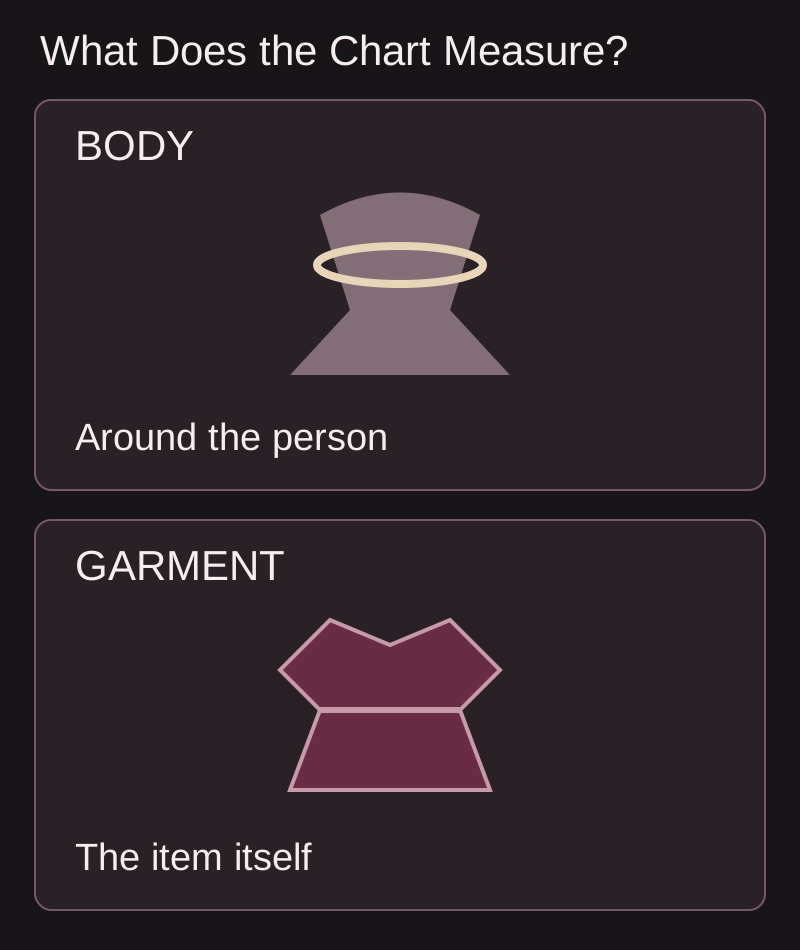
A body chart describes the person the size is intended to fit. A garment chart describes the clothing itself. They are not interchangeable: a garment’s measurements also reflect its cut and intended fit. A flat width is different again from a measurement all the way around.
Look for those words above the table. For example, the Purple Floral Ruffle Dress Set explicitly gives garment measurements in inches and asks you to compare a similar garment that fits. Other styles in this collection use centimeters. If the measurement type or method is unclear, ask for clarification before treating a number as a guaranteed body-fit limit.
Record Bust, Waist and Hips without Pulling the Tape Tight
Use a flexible tape over the undergarments you expect to wear. Measure around the fullest part of the bust, the natural waist and the fullest part of the hips, keeping the tape level rather than compressing the body. JessaKae’s measuring guide demonstrates these three body measurements and makes clear that its own chart is a body chart. That does not make another retailer’s chart one.
Write the units next to every number. Measure twice if the tape shifts, and keep body measurements separate from measurements of a dress you already own. When comparing garments, choose a similar shape and use the same measuring method as the chart; a roomy knit dress is not a reliable stand-in for a closely fitted woven bodice.
Check Every Fitted Area, Not Just the Bust
The Double-Tier Lace-Up Mini Dress lists S as bust 73–86 cm and waist 65 cm, while M lists bust 77–90 cm and waist 69 cm. Those overlapping bust ranges do not erase the difference at the waist. A bust number alone cannot choose between them.
Likewise, the Velvet Lace Slit Dress has a fitted silhouette and provides hip measurements. That column matters in a way it may not for a freely flared skirt. Compare all relevant columns in a single row; do not assemble a fictional size from the bust of one row and the waist of another.
If the numbers point to different sizes, identify the unresolved area and ask about that exact style. Do not assume sizing down will create the intended fitted look, that a lace-up detail can make up any difference, or that alterations will be simple. A published measurement tolerance is not extra wearing room.
Read Where the Length Begins
The Halter Jacquard Mini Dress labels its length as center-back length. The Midnight Blue High-Low Dress says its listed skirt length includes the adjustable shoulder straps. These are different reference points, so comparing the raw lengths does not tell you how much shorter one hem will sit on your body.
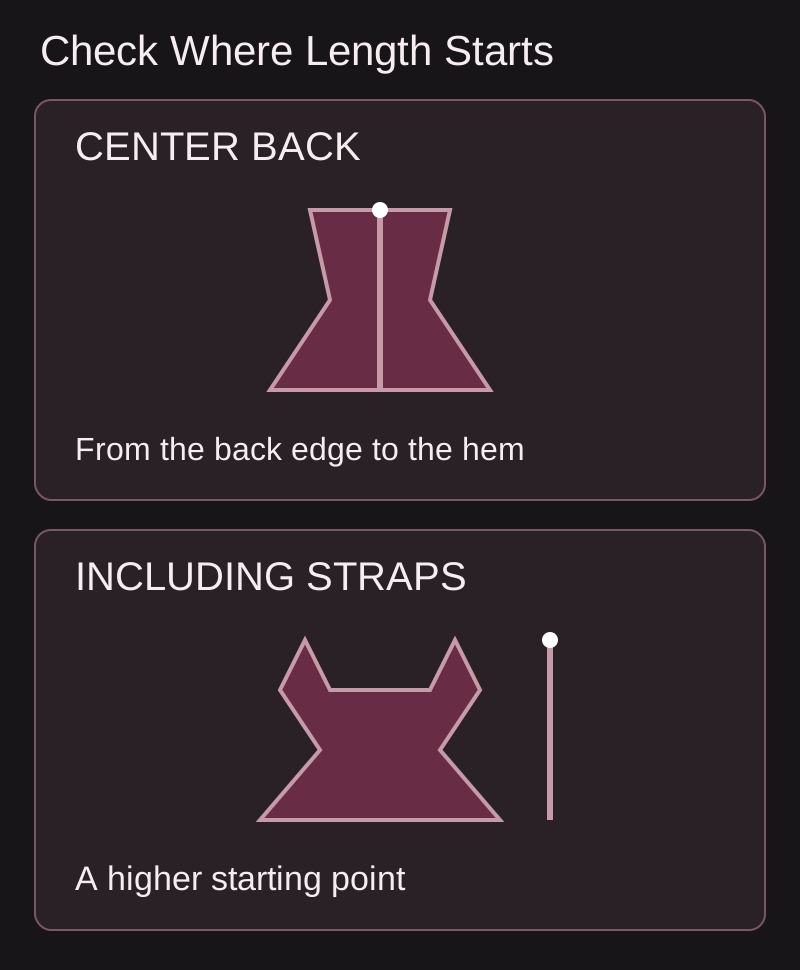
For a mini or high-low shape, look at the front and back separately and ask which hem the stated length reaches if it is not explained. A photograph’s hem position also depends on the wearer’s height and proportions. Use a similar dress at home to visualize coverage only after aligning the starting and ending points.
Make the Last Check on the Product Page
Before choosing a variant, confirm the chart belongs to that exact dress, the units match your notes, and your chosen size is actually offered. Read the fit and measurement notes alongside the table. Save the specific bust, waist, hip or length question that remains rather than guessing from a general US conversion.
Once the measurements make sense, return to the silhouette and details you want. The chart should help you choose between dresses, not persuade you that a poorly explained fit is certain.