For a velvet or lace dress, let the garment’s care label decide the cleaning method. “Velvet,” “velvet-look” and “lace” describe aspects of a fabric or finish, not a universal wash program. Before using water, stain remover, an iron or a steamer, check the instructions for the complete dress, including its lining and trim.
The aim is to preserve the raised surface, open lace and attached details without turning a small mark into a larger problem. You do not need a complicated home-treatment routine; you need to know which treatment this garment actually permits.
Read the Whole Label before Choosing a Method
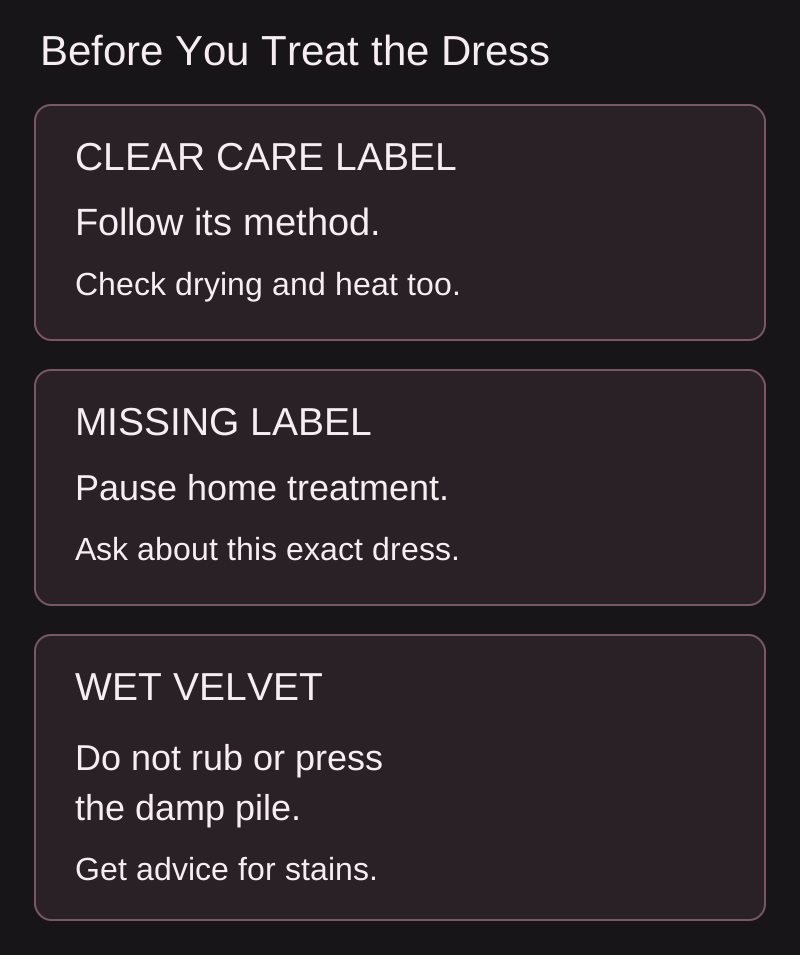
Check washing, drying and heat instructions together. Permission to wash is not permission to tumble dry, and a delicate-looking fabric is not automatically safe to hand wash. The American Cleaning Institute recommends using the product label rather than guessing.
GINETEX’s care-symbol guide explains that a crossed-out wash tub means no washing and that ironing limits come from the care label, not simply the fiber name. If the label is missing or unreadable, get instructions for the exact dress before experimenting. A professional cleaner can also assess the fabric, lining and attached decoration together.
A Product Name Is Not a Cleaning Instruction
The Lace-Trim Velvet Mini Dress is described as velvet-look with lace sleeves. The Velvet Lace Slit Dress lists polyester and elastane, velvet fabric and lace panels. Neither description, on its own, establishes a wash temperature or a safe steaming method.
That distinction matters when a dress mixes surfaces. A treatment suitable for the main fabric may still be unsuitable for a trim or lining. Keep the care information that arrives with the garment, even if you already own another dress that looks similar.
If Velvet Gets Wet, Avoid Pressure
Velvet’s raised surface can flatten. The Drycleaning & Laundry Institute warns against applying pressure to wet velvet and specifically advises against blotting or pressing a damp area. This is a reason not to automatically apply the usual “rub it with a damp cloth” advice to a velvet dress.
For a stain, stop before applying a stain-removal product that the garment’s instructions do not permit. Tell a textile-care professional what spilled, when it happened and whether anything has already been applied. Do not promise yourself that brushing, steaming or ironing will restore a flattened patch; the result depends on the fabric and damage.
Keep Lace Clear of Snagging Hardware
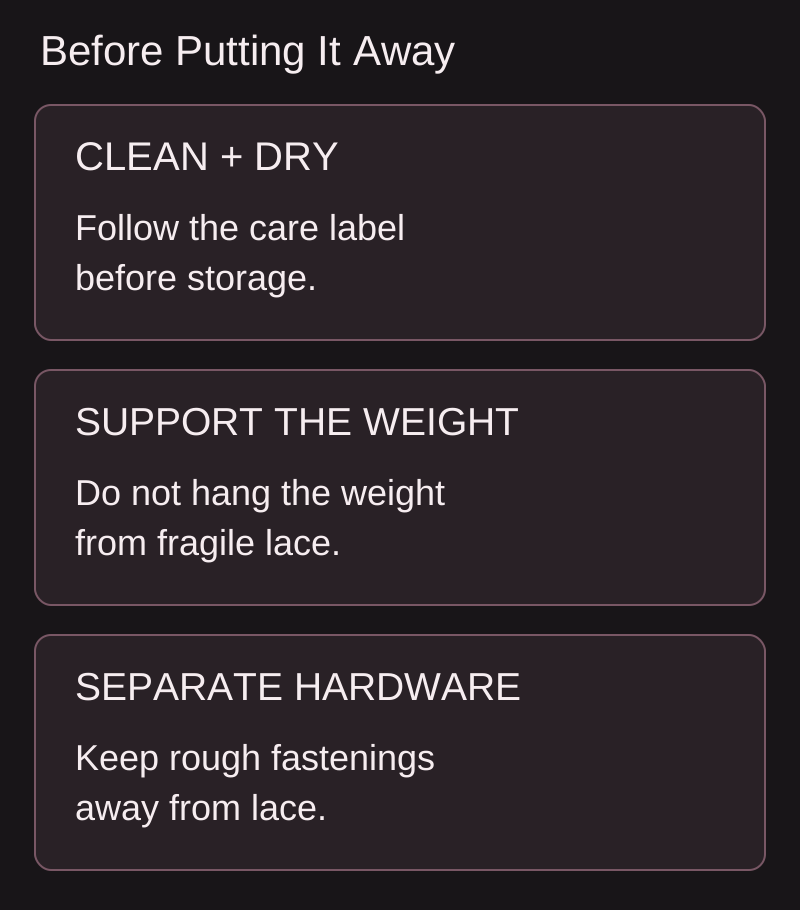
Before putting a dress away, check whether a chain, open hook or zipper is resting against delicate lace. Arrange those parts so they are not catching the fabric. When taking the dress off, guide the fabric free rather than pulling against jewelry or a bag clasp.
This is a handling check, not a cleaning recipe. If the care label permits home washing, follow its method and any fastening or protection instructions. A mesh bag does not make a prohibited wash cycle safe.
Store the Dress without Crushing or Pulling It
For seasonal storage, the American Cleaning Institute recommends cleaning clothing first, making repairs and choosing a cool, dark, dry, ventilated place. Follow the dress’s permitted cleaning and drying method before storing it; do not pack it away damp.
Give the dress enough space that neighboring clothes do not press tightly against its textured surface. Support the garment’s weight rather than leaving it hanging from fragile lace or a delicate decorative tie. If you are unsure whether a heavy or unusually constructed dress should hang or lie flat, ask for storage advice specific to that piece.
Before its next outing, check the seams, fastenings and trim in good light. A clear care label and a quick handling check are more useful than applying the same routine to every black dress in the wardrobe.